Dansaekhwa - 단색화
The Call of the Void
In Korean, "Dansaekhwa" (단색화) means "Monochrome Painting" (Dansaek - 단색 - Monochrome | Hwa - 화 - Painting). The term was first used in 1975 by the art critic Lee Yil (이일) during the exhibition "Five Korean Artists, Five Kinds of White" at the Tokyo Gallery. But it would take another 25 years before Dansaekhwa was formally established as a movement by the critic and curator Yoon Jin-Sup (윤진섭) at the Gwangju Biennale in 2000. From that point on, it would become the face of Korean contemporary art on the international stage for many years.
The movement's defining characteristic was said to be its recurring use of neutral tones: grey, brown, beige and white. Yet according to Park Seo-Bo, one of the movement's founders, this definition, and the term "Dansaekhwa" itself, amounted to a misuse of language. In an interview, he stated: "the tonal aspect isn’t what distinguishes our movement from others. The term is derived from a Western point of view; it is a name created to place the movement in the context of Western art history. In fact, the art of Dansaekhwa is not so much about the colour as it is about the essence of the action itself"
What these artists were seeking had nothing to do with a neutral palette. It was something far more radical: using painting not to express something, but to empty oneself. To repeat a gesture until the ego dissolves, and let the canvas be the trace of that practice, not its goal. Park Seo-Bo drew a parallel with monks who strike their wooden drum endlessly to reach a state of zen. In the Korean Buddhist tradition, the void is not an absence. It is an active, fertile space. It is something one cultivates.
Dansaekhwa took root in a Korea deeply scarred by the major conflicts of the twentieth century. The Japanese colonial period (1910–1945), followed by the Korean War (1950–1953), left the country exhausted and divided. It was in this heavy climate that the founding generation of the movement came of age, a generation that would begin their adult lives under the dictatorship of General Park Chung-hee (1961–1979). An era of rapid modernization, brutal in its pace, where freedom of expression had little place.
To better understand Dansaekhwa, it seems worth considering another movement that, in this same context, sought to be something radically different: Minjung Art (민중미술). Where Dansaekhwa turned inward toward meditation, self-effacement, and the endless repetition of gesture, Minjung Art made art a direct political weapon (murals, banners, woodblock prints) to demand democracy and fight against the dictatorship and all forms of foreign interference. Artists of this movement saw themselves in direct opposition to Dansaekhwa, accusing it of elitism and political disengagement. Two responses to the same era, two ways of breaking free from a suffocating legacy. Minjung Art pursued political liberation in the face of the regime's oppression. Dansaekhwa, for its part, sought a cultural and spiritual liberation, an attempt to reclaim a distinct identity in the face of Western and Japanese influence.
Let us now look at how this philosophy takes shape in the work of some of the movement's key artists.
Park Seo-Bo (1931-2023) - 박서보
Park Seo-Bo, one of the co-founder of Dansaekhwa, defines the foundations of his work as follows: "What I’ve realized over the years is that I must empty myself in order
to soak up elements that I need, in order to make myself more whole. And in
order to empty myself, I must perform repetitive actions." An insight born, he says, from long conversations with Kim Iryeop (Buddhist nun, writer and feminist activist) in 1955. It is from this meditative, almost trance-like state that Écriture (描法) was born, his principal series, begun in the late 1960s.
From 1983 onwards, he incorporated traditional Korean paper known as hanji, made from mulberry bark, into his paintings. This addition would give birth to his most celebrated works. He soaks the paper in water for weeks to make it malleable, then applies it in successive layers onto the canvas. He then works the surface with various tools (bamboo, steel rods, his hands), over and over, until ridges and furrows emerge from the matter and give the canvas its own rhythm. What the viewer sees is not a composition planned in advance. It is the material trace of a practice, of a gesture repeated until the self disappears.
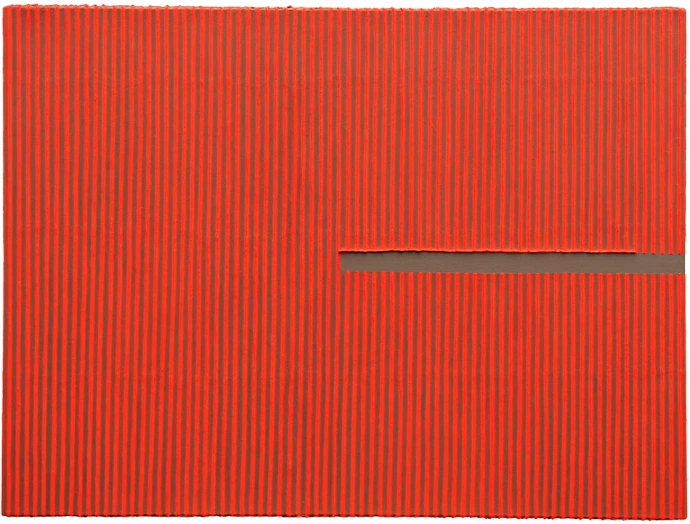
Parc Seo-Bo, Écriture No.070429, 2007, Mixed media with Korean hanji paper on canvas, 97,5 x 130 cm
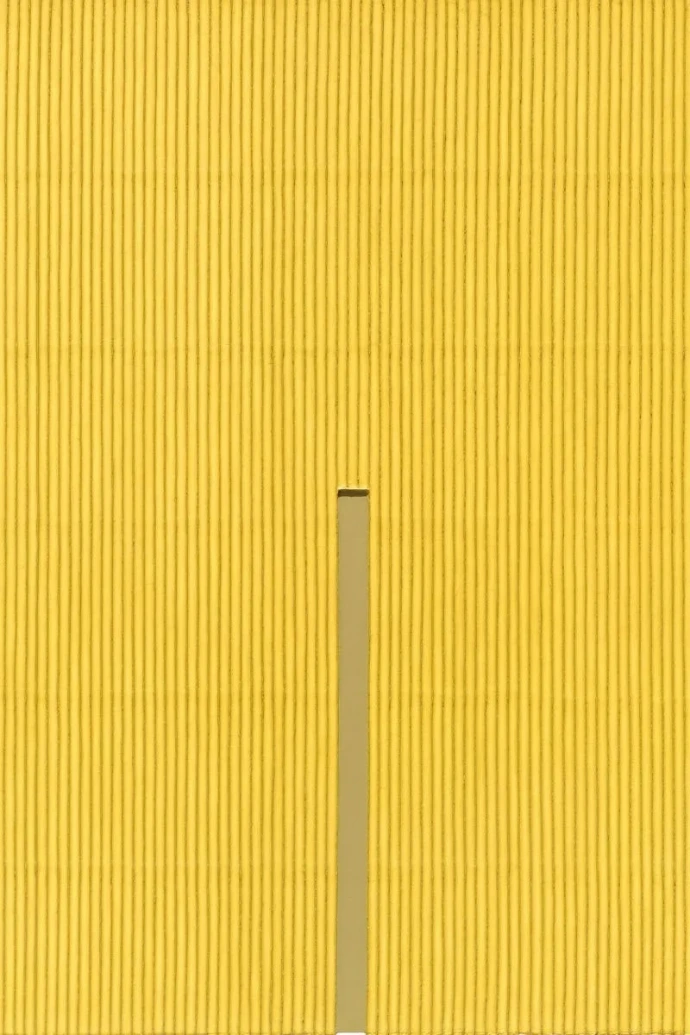
Park Seo-Bo, Écriture No.130924, 2013, Mixed media with Korean hanji paper on canvas, 170 x 130 cm
Kim Tschang-Yeul (1929-2021) - 김창열
Kim Tschang-Yeul devoted fifty years of his life to a single motif: the water drop. Hundreds of thousands of painted drops. Each one identical, each one unique. A gesture that, like Park Seo-Bo's, has nothing to do with a formal obsession. It is an obsession with the action itself. It is a matter of survival.
Born in North Korea under Japanese occupation, he fled south after the liberation in 1945 and never saw his family again. During the Korean War, forcibly enlisted, he witnessed the death of many of his comrades. It was years later, settled in his studio in Paris, haunted by the past and wrapped in the silence of solitude, that the water drop emerged: "I crouched in the studio like a monk, like a hermit, living no differently from someone in spiritual training. [...] That was where my ‘Waterdrops’ were born. In that moment of deepest
hardship, both financial and spiritual, the drop burst forth." It allowed him to ease his anxieties and to "live without fear."
Yet the drops carry no meaning, he insisted. Neither does their repetition. This absence of meaning is precisely the point. To paint without intention, without message. And yet, in the endless repetition of the gesture, to heal what words cannot reach. An absolute devotion to the chosen form: "You do what has to be done with no concept of time, with no concept of finish."
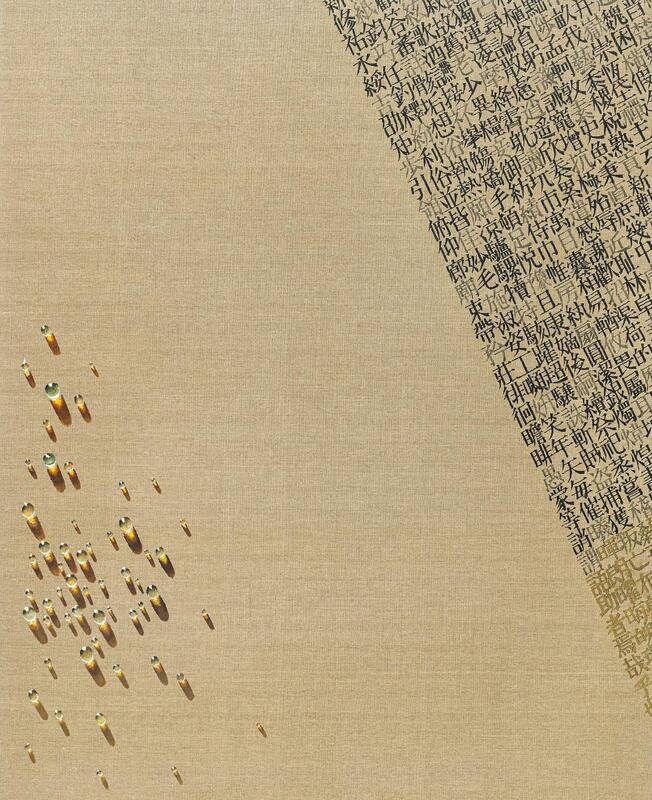
Kim Tschang-Yeul, Recurrence PA1991, 1991, Ink and Oil on canvas, 194,5 x 162,5 cm
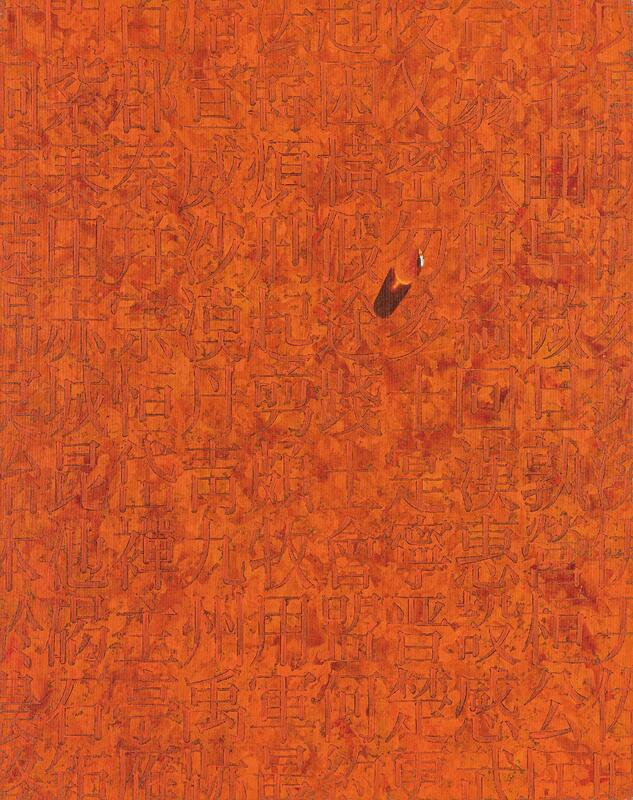
Kim Tschang-Yeul, Recurrence PBL 08007, 2008, Acrylique et huile sur toile, 162.2 x 130.3cm
Ha Chong-Hyun (1935) - 하종현
Throughout his work, Ha Chong-Hyun has constantly explored the properties of materials and what could be done with them. And once again, gesture and action lie at the heart of the artist's philosophy. The gesture in question here is the bae-ap-beop (배압법), or back-pressure method. Rather than applying paint to the front of the canvas, Ha Chong-Hyun pushes it from the back of a coarse burlap canvas. The paint then seeps through the fabric, forming beads on the surface over which he has little control. It is the material that decides. He accepts these forms as they come, without correcting them.
The choice of burlap is not incidental. It was an extremely common material during the Korean War (sandbags, transport of raw materials, etc.). By reusing these materials, he makes direct reference to the hardship, resilience and poverty of postwar Korea. And it is through this heritage that the material itself allows him to escape any Western influence. "My work started from the question: How can I work in a way that opposes the typical methods of the West? That is why I opted to use burlap instead of a traditional canvas that a Westerner would use. I think Dansaekhwa came from the idea that this pursuit could form its own separate movement."
His series Conjunction, begun in 1974 and still ongoing today, is well named. The title points to the connections that the artist's gestures create; between intention and accident, between front and back, between what is willed and what emerges. For it is not the artist who decides the outcome. It is the conjunction between the artist and his canvas.
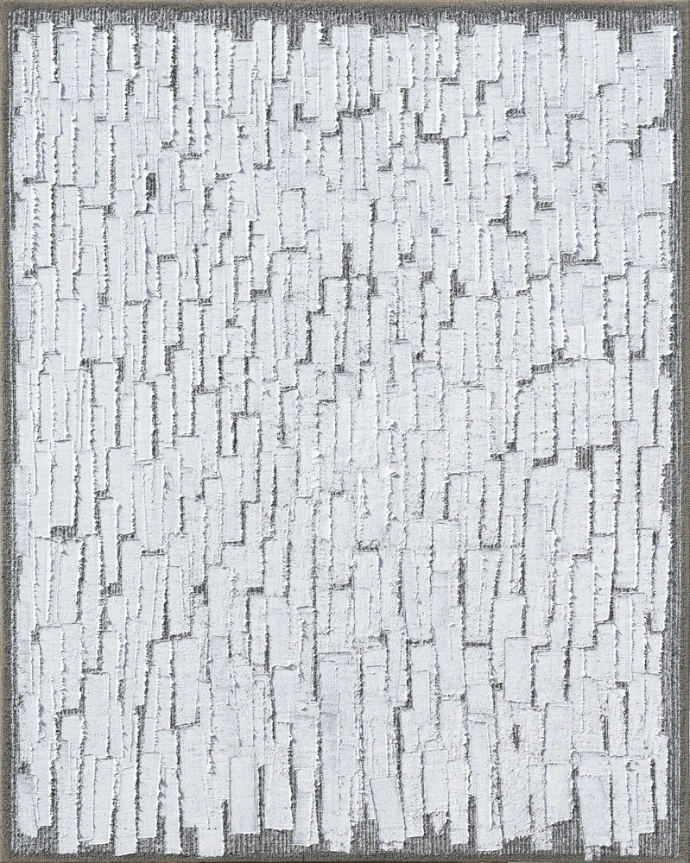
Ha Chong-Hyun, Conjunction 16-390, 2016, Huile sur toile de chanvre, 162 x 130 cm
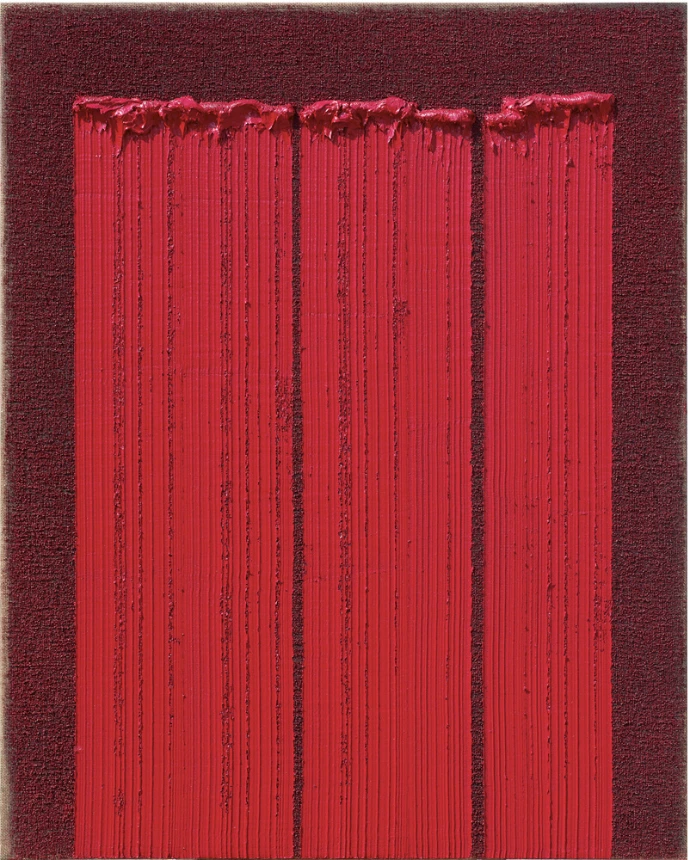
Ha Chong-Hyun, Conjunction 17-20, 2017, Huile sur toile de chanvre, 162 x 130 cm
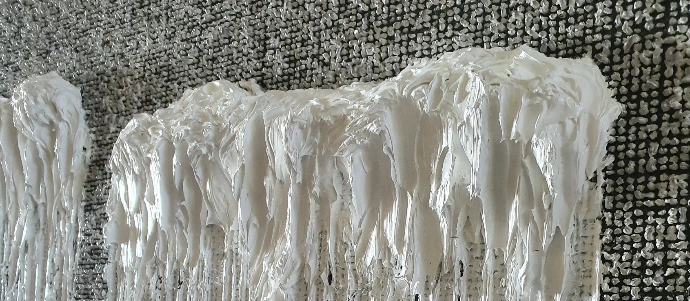
Details of one of these paintings, Conjunction. You can see the beads of paint that pass through the threads of the jute canvas.
Yun Hyong-Keun (1928-2007) - 윤형근
Yun Hyong-keun survived Japanese occupation, the Korean War, imprisonment and even torture under the dictatorship of Park Chung-hee. A life marked by a violence that few people can imagine. And yet his paintings do not cry out in pain. They absorb the darkness.
He is known for using only two colours: burnt umber and ultramarine blue. He dilutes them heavily with turpentine and lets them spread, generally onto raw linen canvas, layer after layer, often before the previous one has dried. The forms that emerge (broad vertical columns, silhouettes of doors or windows) seem to absorb light rather than reflect it.
"The thesis of my painting is the gate of heaven and earth. Blue is the colour of heaven, while umber is the colour of earth", he explained. One might see in this a reference to Cheon-ji-in (천지인): Heaven-Earth-Human. It is a fundamental concept in Korean philosophy that holds the universe to be composed of these three equal and interdependent forces. But by layering the celestial blue and the earthly umber, he allows the colours to merge, darken, until they fade away. The union of Heaven and Earth does not seek to make the canvas shine. On the contrary, it opens a door, a passage, toward an absolute silence. "I want to paint that something which is nothing, that will inspire me endlessly to go on." To choose the void as a destination, not as a starting point.
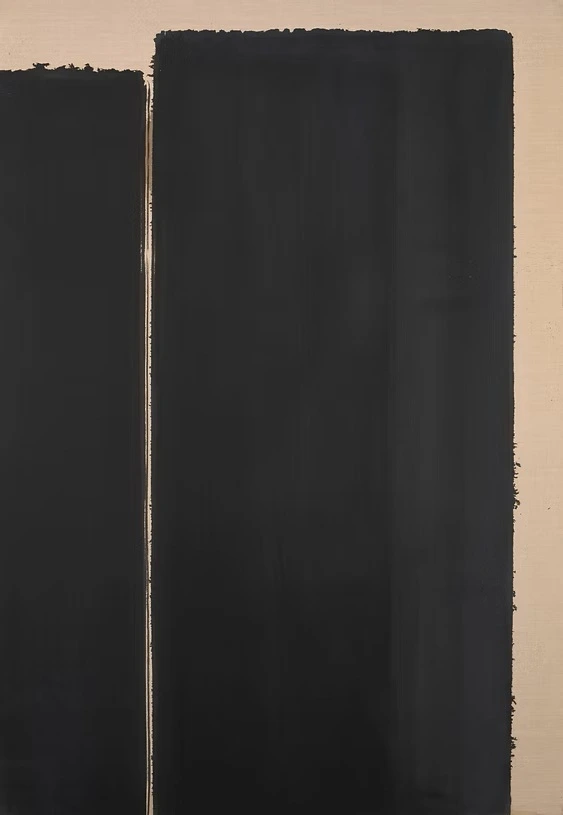
Yun Hyong-keun, Untitled 93-77, 1993, Oil on linen, 160.4 x 112 cm
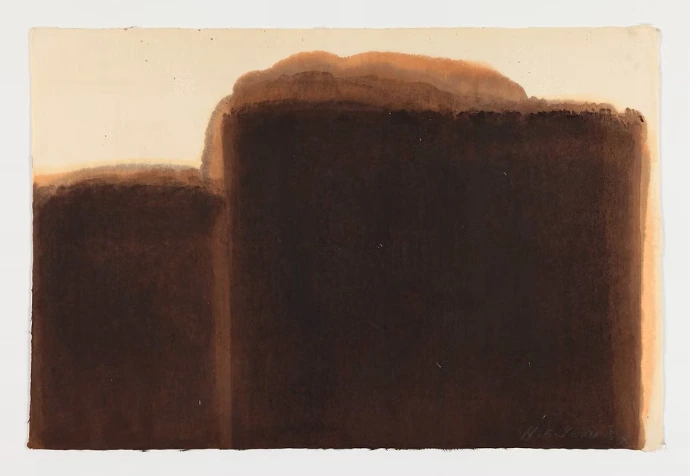
Yun Hyong-keun, Burnt Umber & Ultramarine, 1987, Oil on Hanji, 64 x 95 cm
Chung Chang-sup (1927–2011) - 정창섭
Chung Chang-Sup, in his youth, was profoundly marked by the sight of sunlight filtering through windows covered in hanji. "Through the screen of tak paper, one can distinctively sense the wind, light and the flow of time outside his or her room, which allowed us to experience both feelings of being inside and outside. This is the realm of creation with no intention of creating", he once said. It is this paradox that he would spend his entire life trying to paint.
The hanji, also known as tak, would thus become the primary material of his work. He soaks it in water until it returns to pulp, much as Park Seo-Bo did, then shapes it directly onto the canvas. In his series "Tak", no brush, no added pigment. The material settles, dries, and takes the form that water and time give it. His works have been called "unpainted paintings."
His series Meditation, begun in the 1990s, pushes this logic even further. By blending hanji fibers with natural pigments (charcoal, tobacco leaves) he creates textures that evoke less a canvas than a fragment of the living world (animal skin, bark). On these surfaces, he also traces simple geometric forms, with a slow gesture, repeated endlessly. An interior gesture, a meditative gesture.
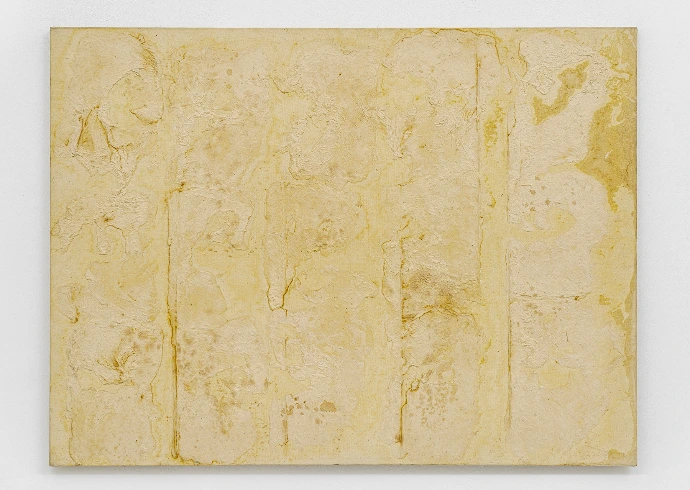
Chung Chang-Sup, Tak 88001, 1988. Tak Fibre on cotton, 97.2 x 130 cm
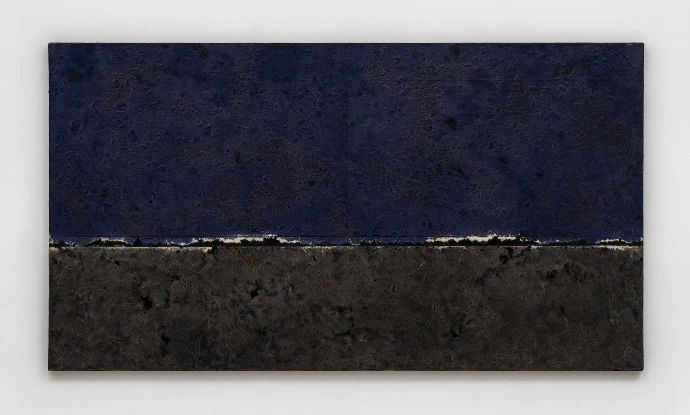
Chung Chang-Sup, Meditation 91101, 1991. Mixed technique with Korean paper, 110 x 200 cm
Chung Sang-Hwa (1932-2026) - 정상화
Chung Sang-Hwa devoted his life to a single question: how to push beyond the two-dimensionality of the canvas without ever abandoning it.
His answer lies in his methodology: "peeling off" and "filling in." He begins by coating the canvas with a thick layer of kaolin clay mixed with water. Once dry, he removes the canvas from its frame, folds it along a regular grid, and allows the surface to crack. He then peels away the fragments of kaolin and fills the gaps with acrylic paint. This cycle, coat-dry-fold-crack-peel-fill, repeats over weeks, months, until a grid emerges. Not as a design planned in advance, but as the residue of the process itself. "Performing the same action over and over again to the point of absurdity, that’s what defines my work", he once said.
As with most of the artists presented here, this repetition of gesture is for him a means of cultivating his inner void. He described it this way: "At every moment of working, I immersed myself in the surface with intense concentration, and the deeper the concentration, the more my inner self became calmly emptied." The grid is no longer merely a motif. It is the imprint of the artist's inner void.
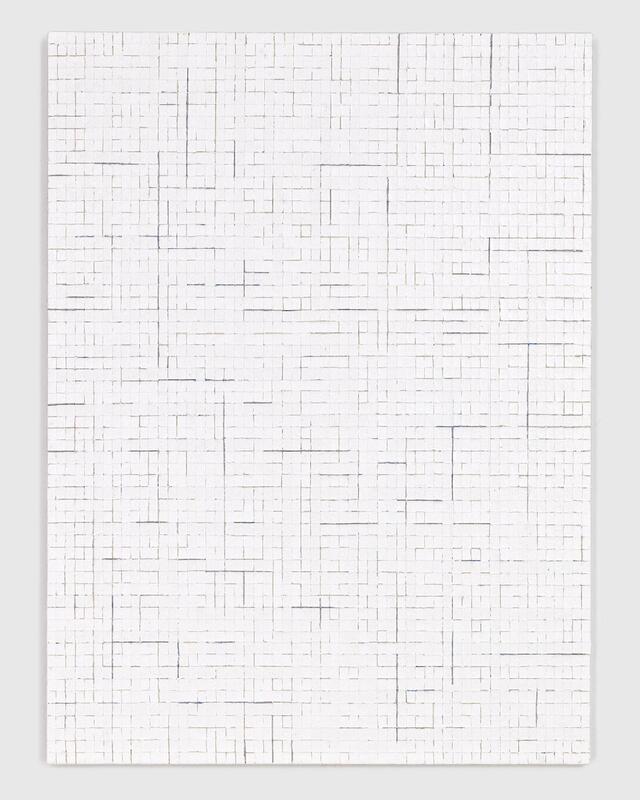
Chung Sang-Hwa, Untitled 017-11-3, 2017, Acrylic and Kaolin on canvas, 130,3 x 97 cm
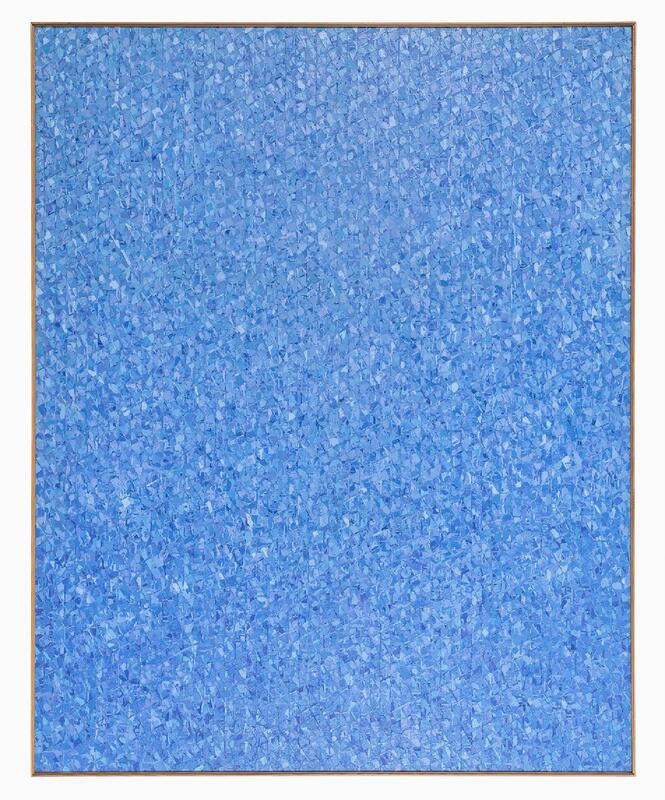
Chung Sang-Hwa, Untitled 86-1-7, 1986, Acrylic and Kaolin on canvas, 227,3 x 181,8 cm
Lee Dong-Youb (1946-2013) - 이동엽
Lee Dong-Youb was the youngest participant in the exhibition "Five Korean Artists, Five Kinds of White" at the Tokyo Gallery. He was 29 years old. And for fifty years, he painted nothing but white on white.
White, huinsek (흰색) in Korean, is for him "a zone of nothingness", "a void for consciousness." But here he speaks of white as a constructed colour. "My white is not a colour of a tube but the colour of a palette." It is the result of an accumulation of successive layers, of mixtures, and of time. His canvases are near-monochrome fields that become vessels for thought.
This contemplative void reminds the viewer that they are an actor, and that it is up to them to give meaning, reflection and interpretation to the work. Where the other Dansaekhwa artists performed their gesture to empty their own minds, Lee Dong-Youb offered this void to the gaze of others. His canvas is not an end but an opening.
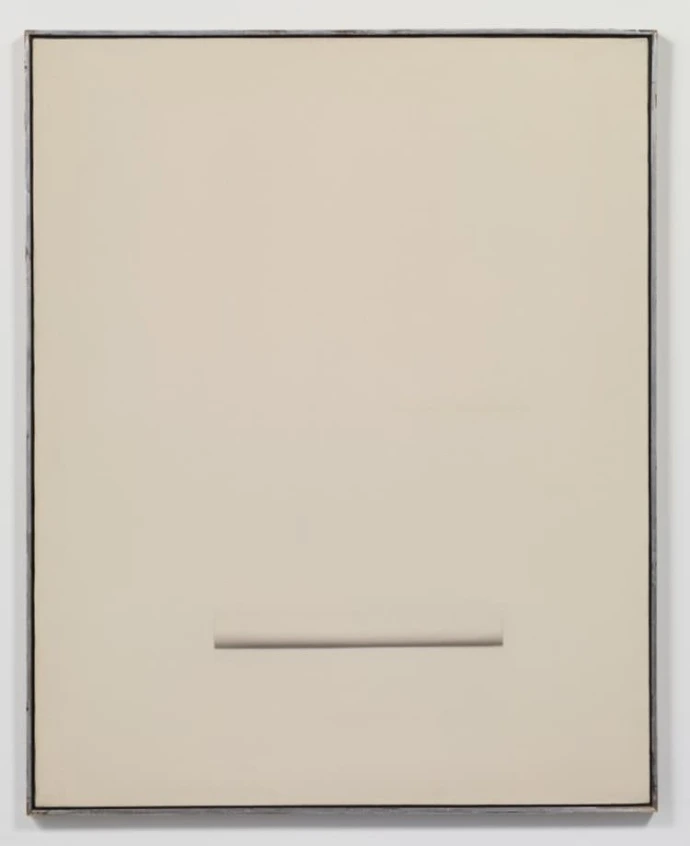
Lee Dong-Youb, Situation B, 1974, Oil on canvas, 100 x 80 cm
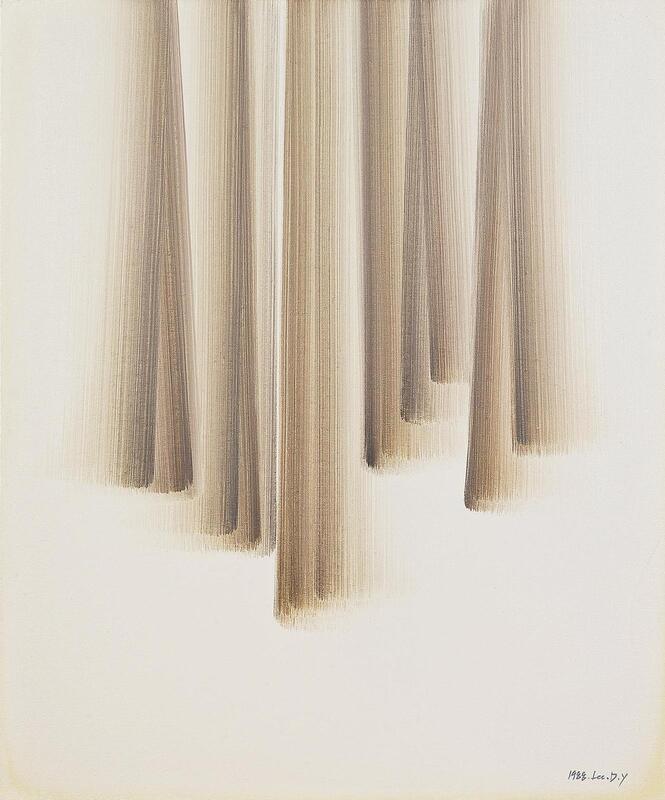
Lee Dong-Youb, Interspace, 1987-1988, Oil on canvas, 71,7 x 60 cm
Sources:
Dansaekhwa :
- https://ocula.com/artworks/selections/dansaekhwa/
- https://en.wikipedia.org/wiki/Lee_Yil
- https://ambikarajgopal.co/2017/06/09/dansaekhwa-less-is-more/
- https://blog.singulart.com/en/2020/10/08/dansaekhwa-exploring-the-korean-monochrome-art-movement/
Minjung Art :
- https://en.wikipedia.org/wiki/Minjung_art
- https://koreanstudies.com/minjungart/
Park Seo-Bo :
- https://psbf.kr/story/?idx=10438869&bmode=view
- https://www.perrotin.com/en/media/ecriture-at-perrotin-new-york
- https://publicdelivery.org/park-seo-bo-ecriture/
- https://www.whitecube.com/gallery-exhibitions/park-seo-bo-paris-2026
- https://www.youtube.com/watch?v=oywnKMASGck (In the Studio: Park Seo-Bo | White Cube)
- https://www.youtube.com/watch?v=m--qwpL6G38 (Park Seo-Bo 박서보, Artist Interview, 2019-20)
Kim Tschang-Yeul :
- https://www.frieze.com/article/frieze-week-magazine-seoul-2025-kim-tschang-yeul
- https://www.koreatimes.co.kr/lifestyle/arts-theater/20250828/frieze-2025-kim-tschang-yeul-the-painter-who-made-fleeting-waterdrops-eternal
- https://www.alminerech.com/exhibitions/1110-kim-tschang-yeul-water-drops
Ha Chong-Hyun :
- https://www.conjunction1935.com/biography
- https://www.kukjegallery.com/artists/view?seq=344
- https://www.youtube.com/watch?v=sipDRFRbmUU (Studio Visit | Ha Chong-Hyun)
- https://www.koreaherald.com/article/10564896
- https://tinakimgallery.com/news/192-amid-renewed-interest-in-korean-dansaekhwa-art-ha-artsy/
Yun Hyong-Keun :
- https://www.hastingscontemporary.org/events/yun-hyong-keun/
- https://www.axel-vervoordt.com/gallery/artists/yun-hyong-keun
- https://en.namu.wiki/w/%EC%B2%9C%EC%A7%80%EC%9D%B8 (Cheon-ji-in)
Chung Chang-Sup :
- https://ocula.com/artists/chung-chang-sup/
- https://www.axel-vervoordt.com/gallery/artists/chang-sup-chung
- https://www.artsy.net/artist/chung-chang-sup
Chung Sang-Hwa :
- https://www.koreaherald.com/article/10666460
- https://www.koreatimes.co.kr/lifestyle/arts-theater/20260128/dansaekhwa-artist-chung-sang-hwa-dies-at-93
Lee Dong-Youb :
- https://ocula.com/artists/lee-dong-youb/
- https://en.wikipedia.org/wiki/Lee_Dong-youb
- https://www.youtube.com/watch?v=yGniUPcXUkQ (The Origin of Dansaekhwa : LEE Dong-youb (이동엽) 'White is a Void for Consciousness' | Riveruns)