Chun Kwang Young - 전광영
Aggregation - The Souls of the Mulberry Tree
Born in 1944 in Hongcheon, in northern South Korea, Chun Kwang Young is best known for his highly meticulous use of hanji paper. "Hanji (Korean: 한지) is traditional handmade paper from Korea. It is made from the inner bark of the paper mulberry" (Wikipedia).
To begin, he hand-shapes thousands of triangles, wrapping each one individually in hanji paper before tying them with string. He then dyes every single element separately. Finally, he assembles these triangles into large, complex, mesmerizing, and more or less colourful works. Consequently, a single piece requires several months to be complete. To my knowledge, he is the only artist producing this kind of work. These assemblages, using hanji paper in this specific manner, form a series titled: Aggregation.
The idea of using hanji paper this way reportedly originates from his childhood. In a 2018 interview for Art Avenue, he explained: "My great-uncle ran a traditional medicine shop. He would wrap the medicine in hanji paper, write the prescription on it in cursive, tie it all up with string, and hand it to the customer, who would receive it politely and go home. I saw this scene so many times that it remained engraved in my memory." (Youtube : [Arts Avenue 2018] Chun Kwang-young: Works 1975-2018 전광영 : WORKS 1975-2018 展 ← The video has been set to private)
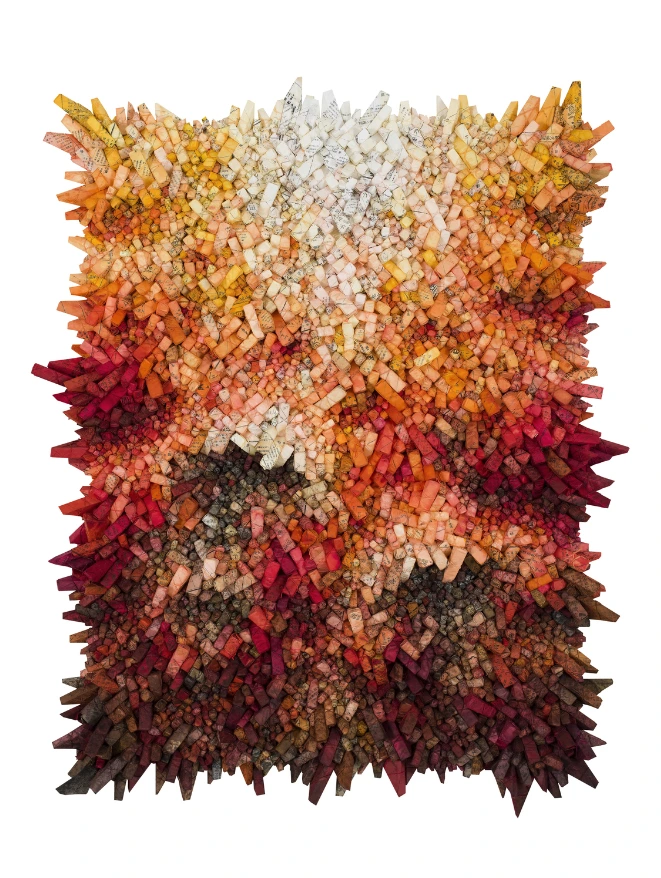
Chun Kwang-Young, Aggregation 19, 2019, Mixed Media with Korean hanji paper, 154,9 x 127 cm.
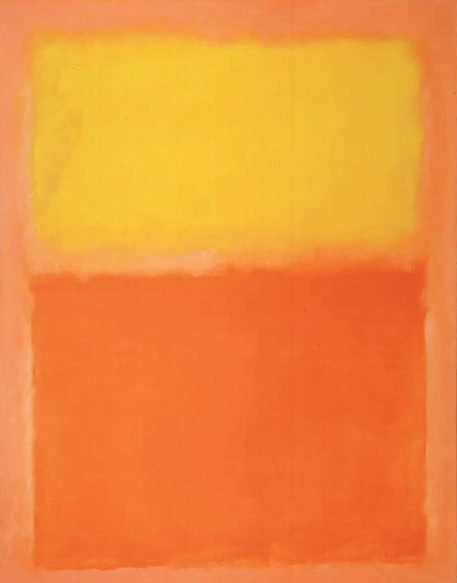
Mark Rothko, Orange and Yellow, 1956, Oil on canvas, 231,14 x 180,34 cm
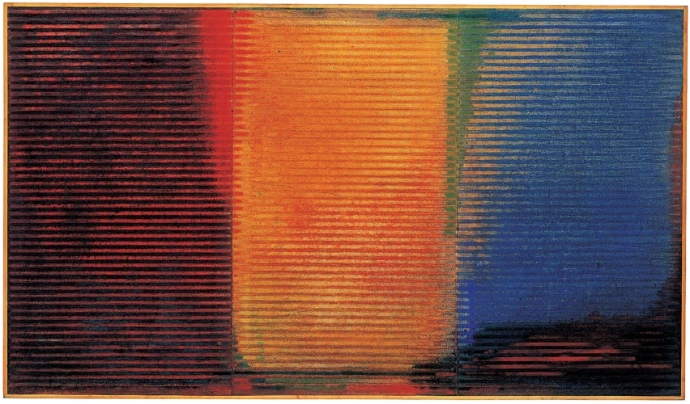
Chun Kwang-Young, ONT - 012, 1976, Oil on canvas, 131 x 227 cm
However, this Western influence left him feeling voiceless. He felt unable to express his true emotions using the forms of expression of another culture. It was like trying to express one's deepest thoughts in a language that wasn't his own. As he stated in an interview with Singapore Tatler: "This feeling was akin to copying someone else’s artwork. From then on, I decided to do something that was related to my Korean heritage." This is why he began using hanji paper in his art. Hanji paper can be found everywhere in Korea: medicinal herb pouches in traditional markets, books, windows of hanoks (traditional Korean houses), painting canvases, etc. It is a material "that every Korean can relate to."
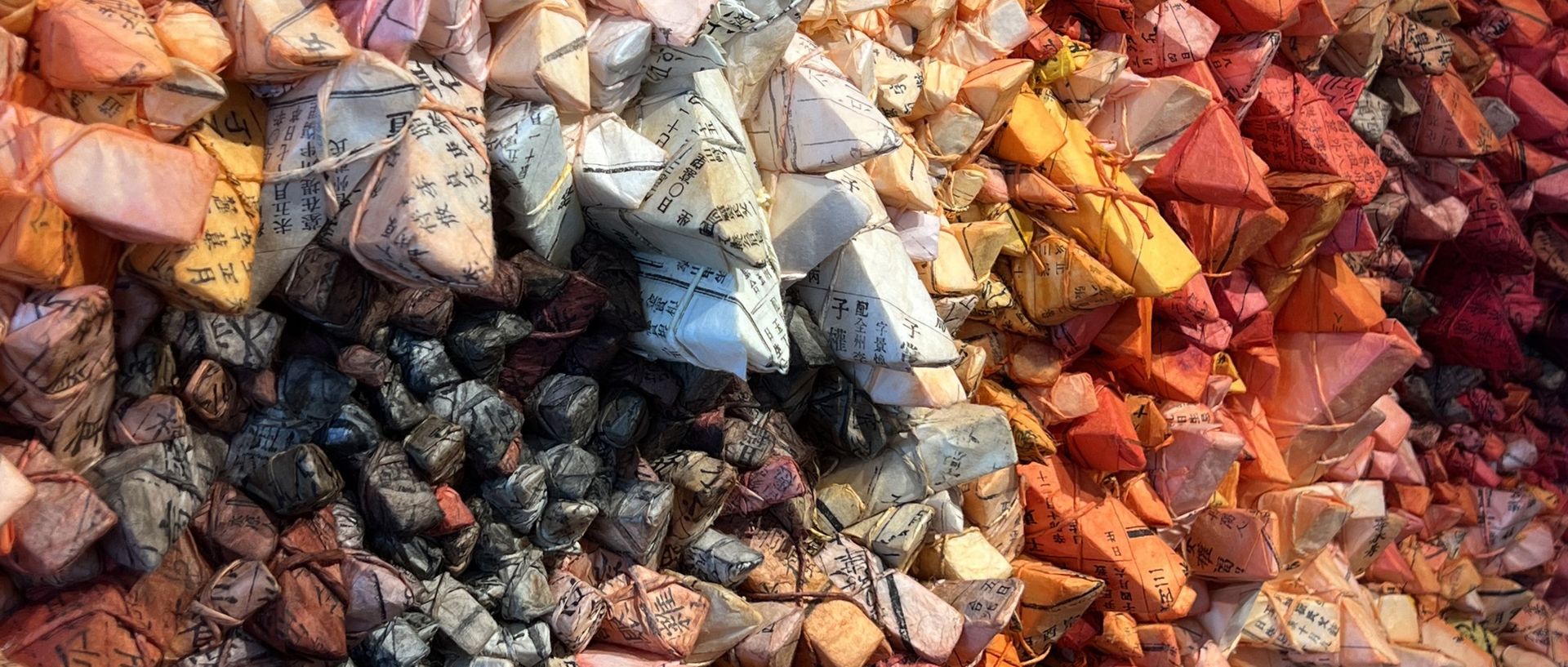
Detail from "Aggregation 19" - Triangles wrapped in hanji paper and tied with twisted cords.
Beyond wanting to use a material that symbolizes Korean identity, he also sought to incorporate Korea's History. To achieve this, he uses Korean papers that are 70, 80, 100, or even 150 years old. In doing so, he integrates the memories, stories, thoughts, and lives of all Koreans, young and old, men and women, rich and poor, who once wrote on, read, or shared these papers. When speaking about the paper he uses, he said: "I am not just showing what can be seen directly, but the history and identity of the nation embedded within them."
These papers, having already lived rich and full lives, are thus reincarnated into artistic assemblages, allowing the souls of the mulberry papers to continue their journey through History. It is this gathering of stories that gave the series its name. "That is why I used the word 'Aggregation,' because [my works] aggregate all these stories together into one." (Youtube : Times Reimagined Exhibition Film)
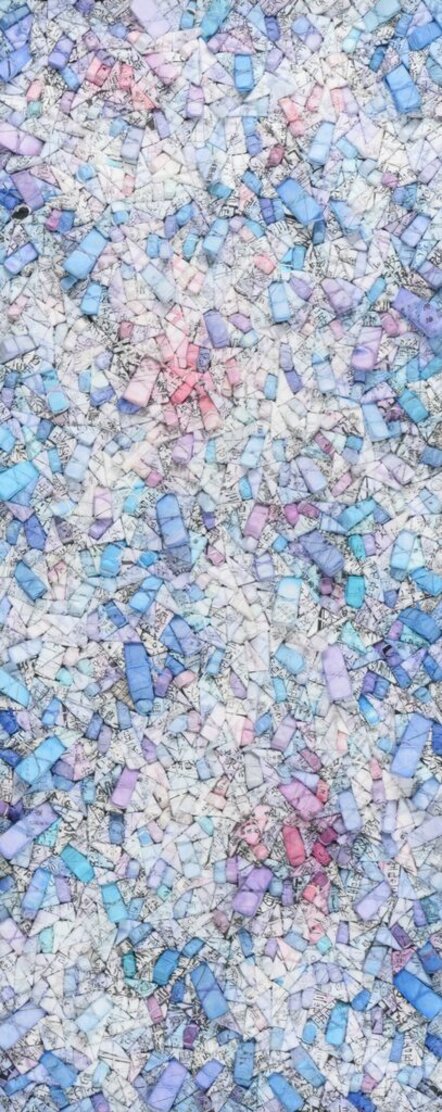
Chun Kwang-Young, Aggregation 19, 2019, Mixed Media with Korean hanji paper, 154,9 x 127 cm.
Sources :
• chunkwangyoung.com
• tatlerasia.com/culture/arts/5-questions-with-chun-kwang-young
• ocula.com/artists/chun-kwang-young/artworks/
• Youtube : Times Reimagined Exhibition Film
• Youtube : [Arts Avenue 2018] Chun Kwang-young: Works 1975-2018 전광영 : WORKS 1975-2018 展 ← The video has been set to private
• Wikipedia : Korean Paper
• Wikipedia : Color Field painting
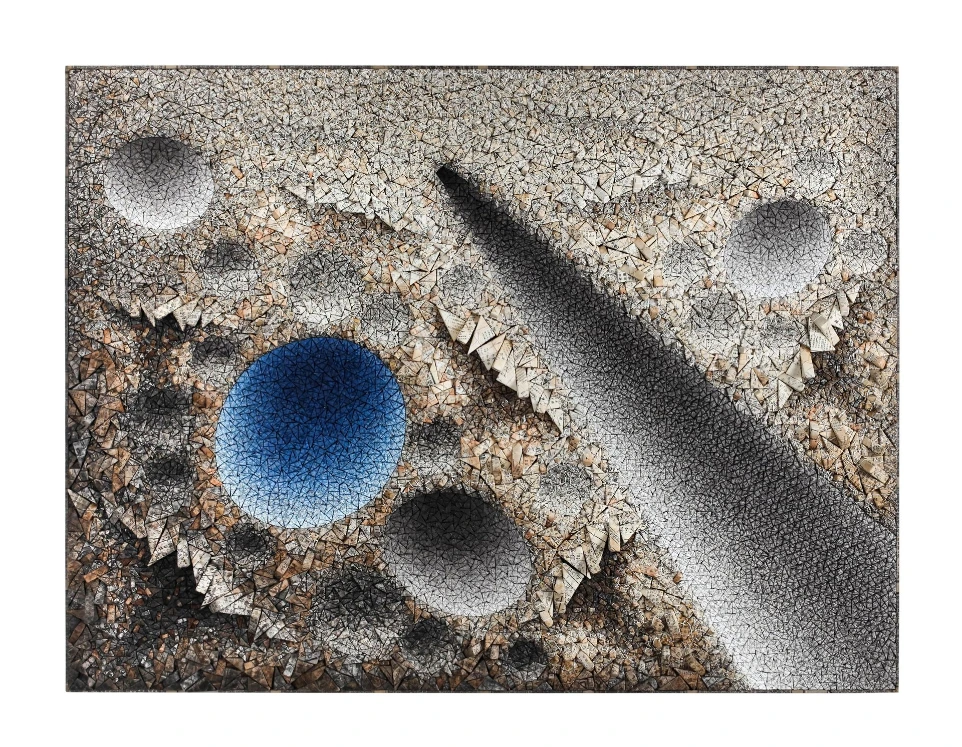
Chun Kwang-Young, Aggregation 14 - JA005 Blue, 2014, Mixed Media with Korean hanji paper, 152 x 194 cm
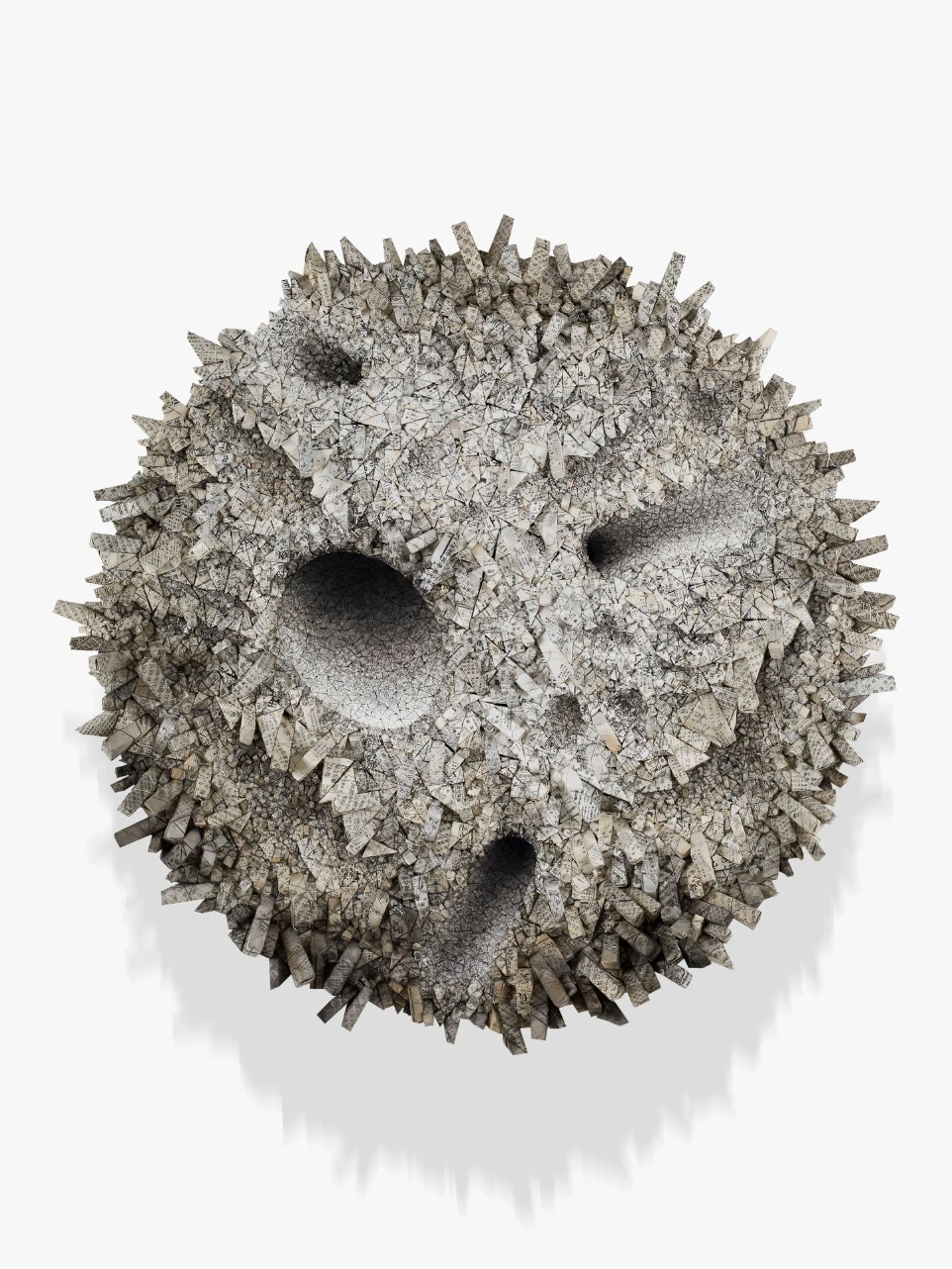
Chun Kwang-Young, Aggregation 19 - FE 009 (Star 1), 2019,Mixed Media with Korean hanji paper, diamètre 160 cm